Amazon road set to give Brazil and Peru new trade route

Amazon road set to give Brazil and Peru new trade route

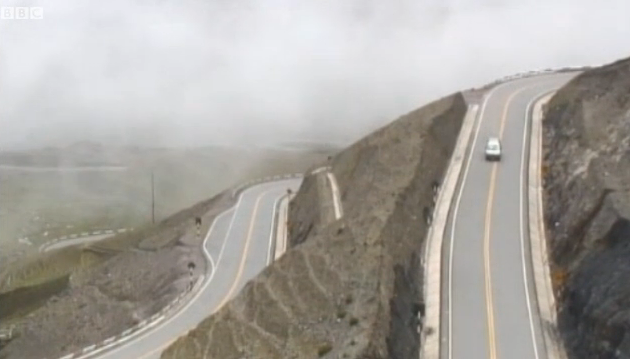
A new road linking the east and west coasts of South America is being opened.

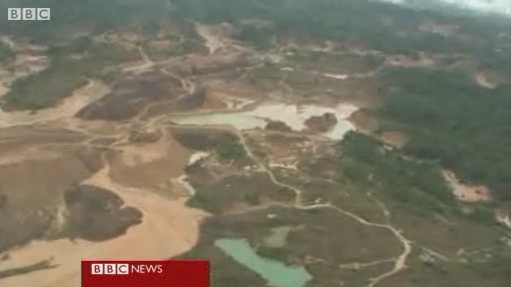
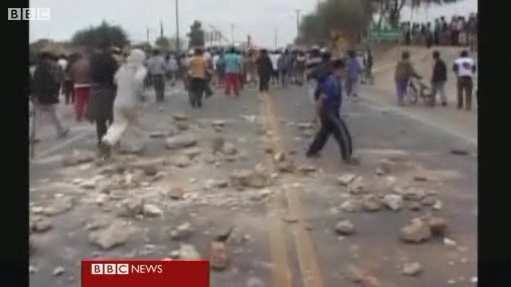
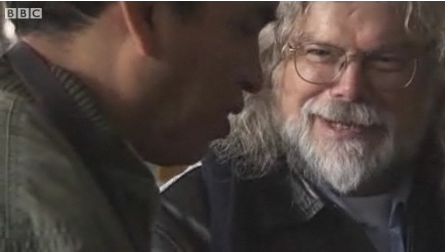
The road runs through Brazil and Peru and some like Luis Aguirre, Governor of Peru’s Madre de Dios region, are warning of the damage the new road will cause.

But supporters, like cafe owner Suleyde Ochoa, say it will bring huge economic benefits to both countries.

See the video on the BBC

How a Peruvian island is making money from bird poo

How a Peruvian island is making money from bird poo

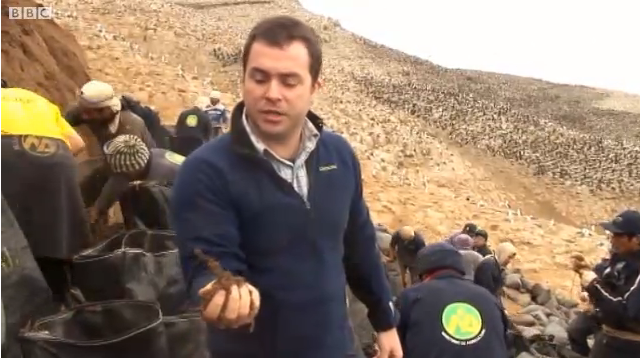
Guanape Sur island off northern Peru makes money from selling bird droppings – also known as guano. Commonly used in the 19th Century as a fertiliser, this organic product is making a comeback.

Two types of sea bird whose droppings produce guano – the Peruvian Booby and Guanay Cormorant – are protected. About 300 men live and work on the island for eight months of the year.

The guano is shipped off to organic farmers in Peru’s mountains and jungle. Peru is the world’s number one guano producer, with 30,000 tonnes a year.

See the video on the BBC

Annual ‘Rodeo of the Andes’ as wild vicunas are rounded up

Annual ‘Rodeo of the Andes’ as wild vicunas are rounded up

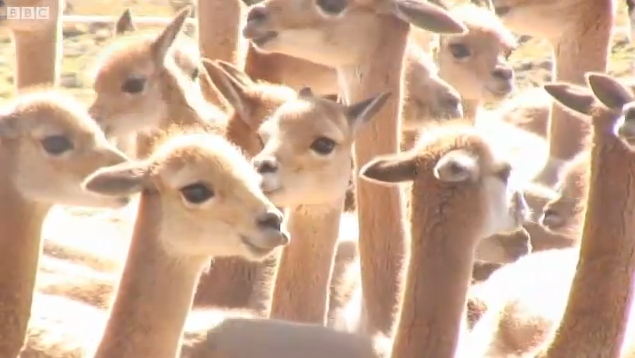
The Chaccu is a yearly round-up of wild vicunas, the national animal of Peru.

Small and slender relatives of the llama, vicunas are endangered and prized for their wool.

Because they are wild, a rope more than a mile long is used by Andean villagers to surround the animals and herd them into a corral to be sheared.

And as Dan Collyns finds out, the Chaccu is a sacred ritual which is hundreds of years old.

See the video on the BBC

Close-Up: Peru’s beer-drinking ritual

Close-Up: Peru’s beer-drinking ritual

In an ongoing series, BBC News focuses on aspects of life in countries and cities around the world. What may seem ordinary and familiar to the people who live there, can be surprising to those who do not.
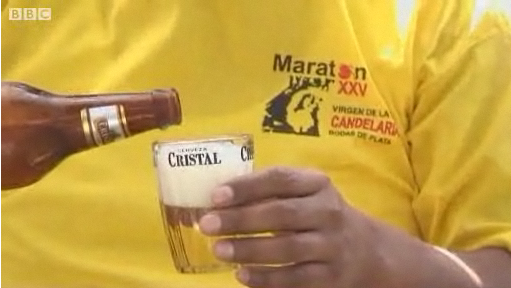
Having a drink with friends is part of Peruvian culture – and there are very specific rules about the way that beer is shared.
Dan Collyns joins a group of football-playing friends as they enjoy a post-match drink – and tries to get to grips with a very old tradition.

See the video on the BBC

Peru’s Machu Picchu re-opens to tourists

Peru’s Machu Picchu re-opens to tourists

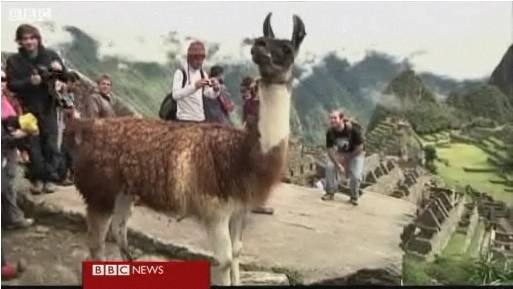
Peru’s most famous archaeological site, Machu Picchu, has formally reopened after heavy rains and landslides cut rail access to the site, forcing it to close for two months.
Hundreds of tourists, including US actress Susan Sarandon, took the train to the 15th Century Inca ruin – the most-visited site in Latin America.
Peru had lost some $200m (£131m) in revenue because of the closure.

See the video on the BBC

Machu Picchu tourist airlift ends with 1,300 flown out

Machu Picchu tourist airlift ends with 1,300 flown out

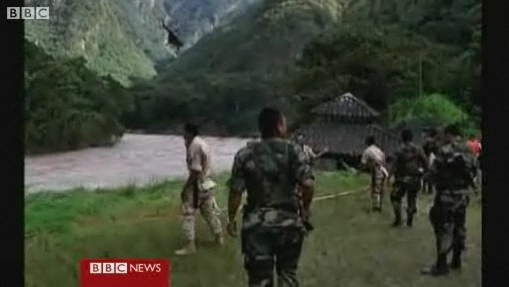
Police in Peru say they have airlifted the last of the tourists stranded near the Inca ruins of Machu Picchu after floods destroyed road and rail links.
Nearly 1,300 travellers were flown out by helicopters on Friday, a local policeman told the Associated Press.
A total of nearly 4,000 tourists and local residents have now left the area following last Sunday’s heavy flooding.

See the video on the BBC

Peru rebuilds two years on from quake

Peru rebuilds two years on from quake

Since 1970, Peru has been hit by five powerful and deadly earthquakes. The latest struck Peru’s coast exactly two years ago with a magnitude of 8.0 on the Richter scale.

It fiercely shook the capital Lima, but its devastating epicentre was about 200km (124 miles) to the south, near the town of Pisco, a small fishing port built largely of adobe – mud bricks which Peruvians have used for thousands of years.

More than 500 people were killed and about 75,000 homes were left uninhabitable.

For Peruvian engineer Marcial Blondet, it was the devastating quake in 1970 that first motivated him to develop earthquake-resistant buildings, particularly for those who could least afford them.

Some 70,000 people died in the mountainous region of Huaraz, many of them in an avalanche of snow, ice and rock which obliterated the town of Yungay. It was the deadliest earthquake in Latin American history.

See the full article and video on the BBC